 QuizScreen
Evidence-based guide
How to Stop Checking Your Phone While Studying
Treat phone checking as an environment and workflow problem. Make the next study action obvious, make the distracting action harder, and measure whether the setup works for you.
Tested workflow
How to set it up
- 1Choose one measurable study outcome for the next 25–50 minutes.
- 2Move the phone out of reach and silence nonessential notifications.
- 3Block the specific apps that repeatedly interrupt the session.
- 4Write down any urge or task that can wait instead of opening the phone.
- 5Review Screen Time weekly and change one part of the setup at a time.
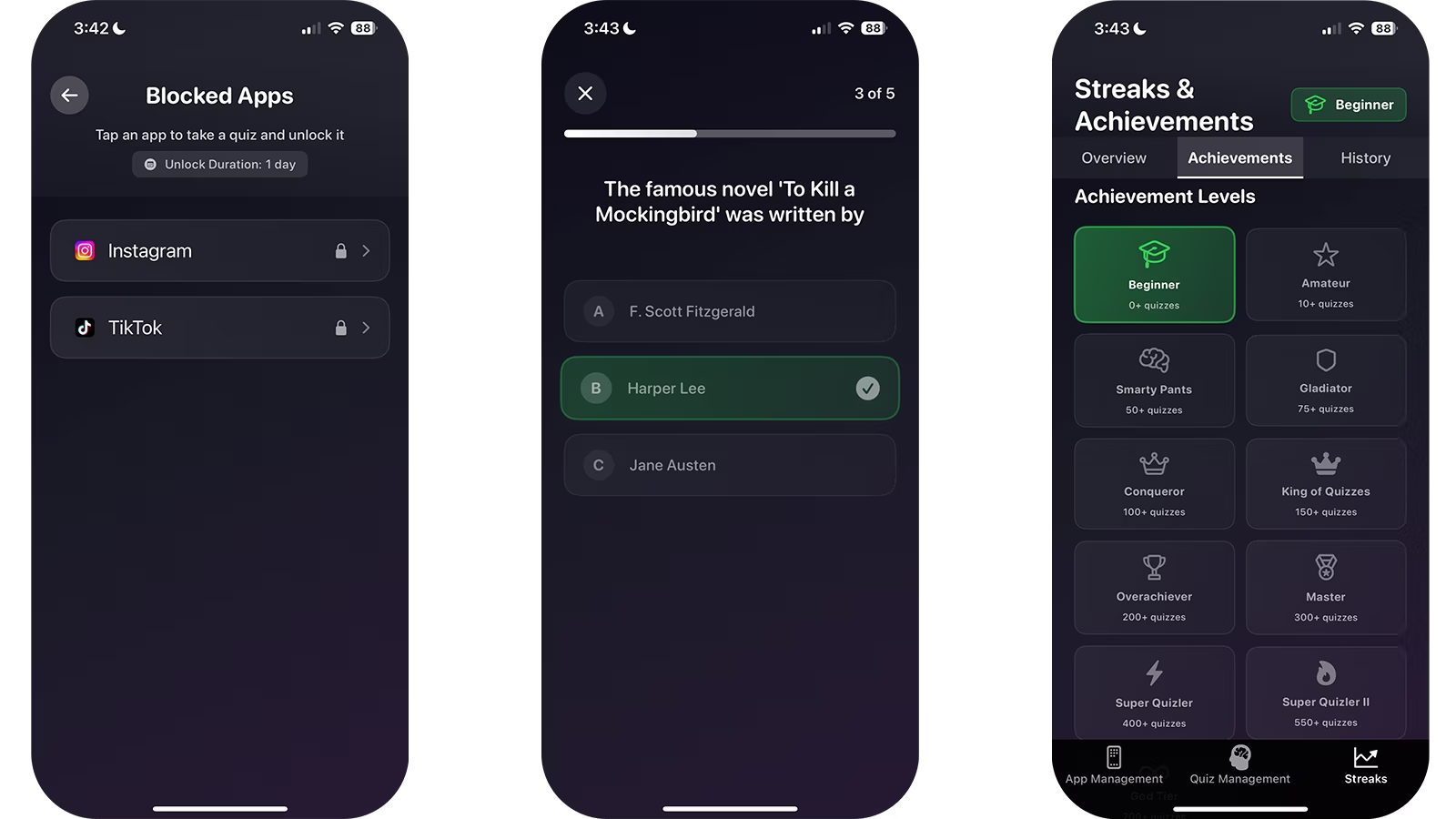
Reduce cues before relying on self-control
A visible phone, notification preview, or vague study task can repeatedly cue checking. Removing the cue and defining the next action reduces the number of decisions required during the session.
If the phone must remain nearby, use a blocker and place it face down beyond arm’s reach.
Plan access instead of promising abstinence
Schedule a short check after a defined work block. A planned break is easier to follow than an indefinite ban and gives you a clear moment to respond to nonurgent messages.
Limitations and fit
- Phone-checking patterns vary, and no single technique works for everyone.
- Seek qualified support if phone use is causing serious distress or impairment.
- Research findings about phones and cognition do not prove the same effect for every individual or task.
Questions and answers
Should I put my phone in another room?
Try it when practical. If you need the phone for safety or coursework, keep essential apps available and block only the repeated distractions.
How long should a study block be?
Choose a duration you can repeat consistently. Twenty-five to fifty minutes is a useful experiment, not a universal rule.
Sources
- Brain Drain: The Mere Presence of One’s Own Smartphone Reduces Available Cognitive Capacity — Journal of the Association for Consumer Research
- Smartphones and Cognition: A Review of Research Exploring Mobile Technology Habits — Frontiers in Psychology