 QuizScreen
Evidence-based guide
Active Recall in Small Study Moments
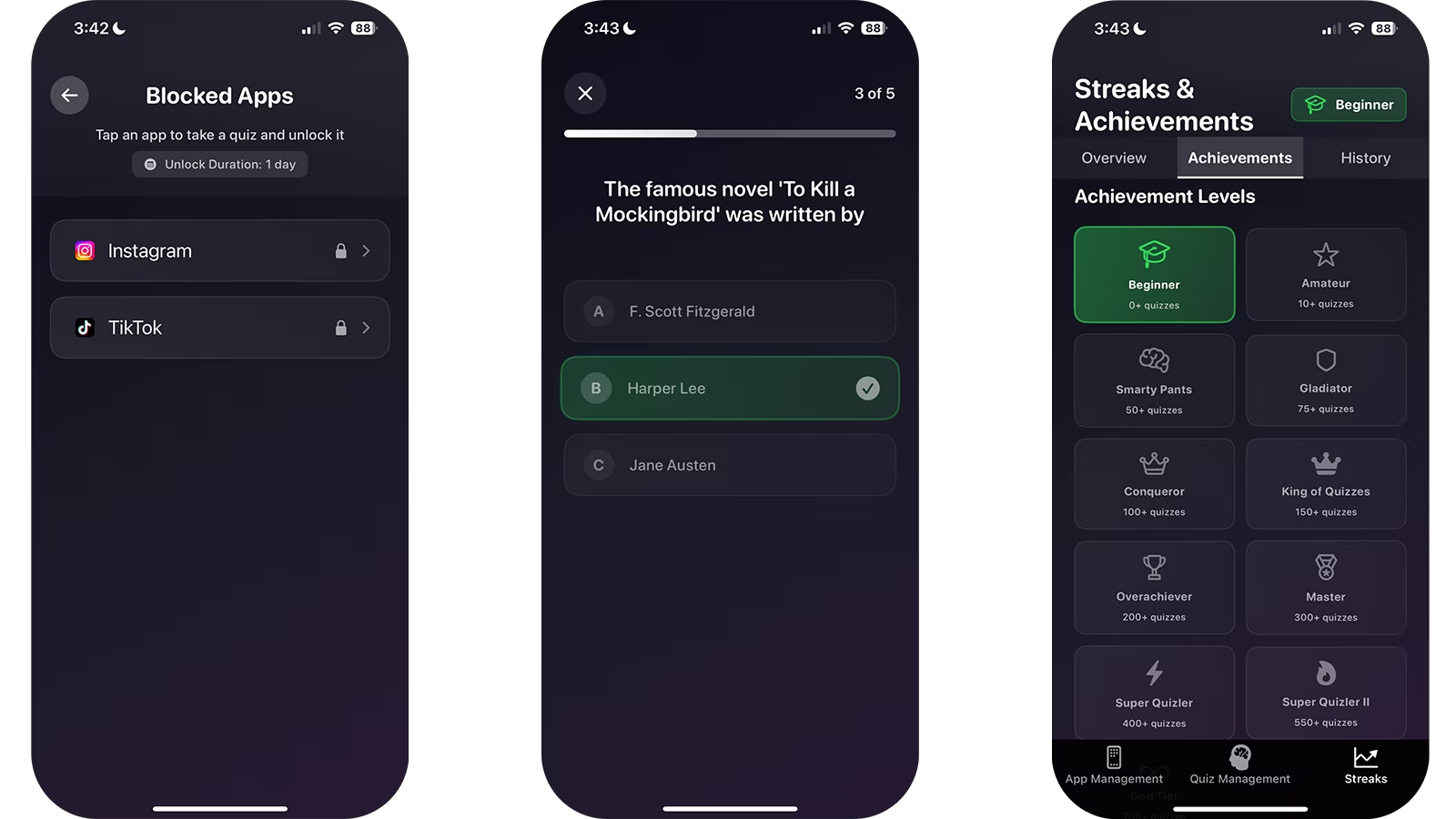
A short quiz can prompt retrieval practice, but the value comes from recalling information—not from the app, the streak, or the number of questions alone.
Tested workflow
How to set it up
- 1Study and understand the material before testing yourself.
- 2Turn a narrow learning objective into a question that requires recall.
- 3Answer without looking, then check the response against a trusted source.
- 4Correct mistakes immediately and revisit difficult material later.
- 5Use short prompts alongside longer problems, explanations, and cumulative review.
What active recall can do
Practice testing and distributed practice received strong ratings in a major review of learning techniques. Short quizzes can make retrieval easier to repeat throughout a week.
The question quality and feedback still matter. A confidently remembered wrong answer is not useful practice.
What microlearning cannot do
Five isolated questions cannot replace reading, problem solving, writing, laboratory work, clinical reasoning, or full-length exam practice. Use microlearning for reinforcement and cues, not complete coverage.
Limitations and fit
- QuizScreen-generated questions may contain errors and should be checked against authoritative material.
- Learning effects depend on question quality, feedback, spacing, and the learner’s prior knowledge.
- Microlearning is a supplement rather than a complete curriculum.
Questions and answers
Is active recall the same as rereading?
No. Active recall asks you to produce an answer from memory before checking the source.
How often should I repeat a question?
Revisit difficult material across multiple sessions. There is no universal interval for every learner and subject.
Sources
- Improving Students’ Learning With Effective Learning Techniques — Psychological Science in the Public Interest
- Distributed Practice in Verbal Recall Tasks: A Review and Quantitative Synthesis — Psychological Bulletin